
THE STUDIO | 5 MINUTE READ
HOW TO CHOOSE FURNITURE
FOR HOT CLIMATES: DESIGN TIPS
FOR DUBAI HOMES
Many people choose Dubai for its year-round sunshine and indoor-outdoor living, where residents move seamlessly between interior spaces, shaded terraces, and open-air pools.
While people find it easy to make the move, furnishings that work in cooler climates may not transfer so easily. Climate is an important consideration for interior designers, who must ensure the longevity, durability and practicality of the materials they specify while creating beautiful, inviting spaces.
Our homes are where our lifestyles, architecture, and climate interact, and it is important that designers examine their relationship from the outset of a project.
DESIGNING BEYOND THE INTERIOR
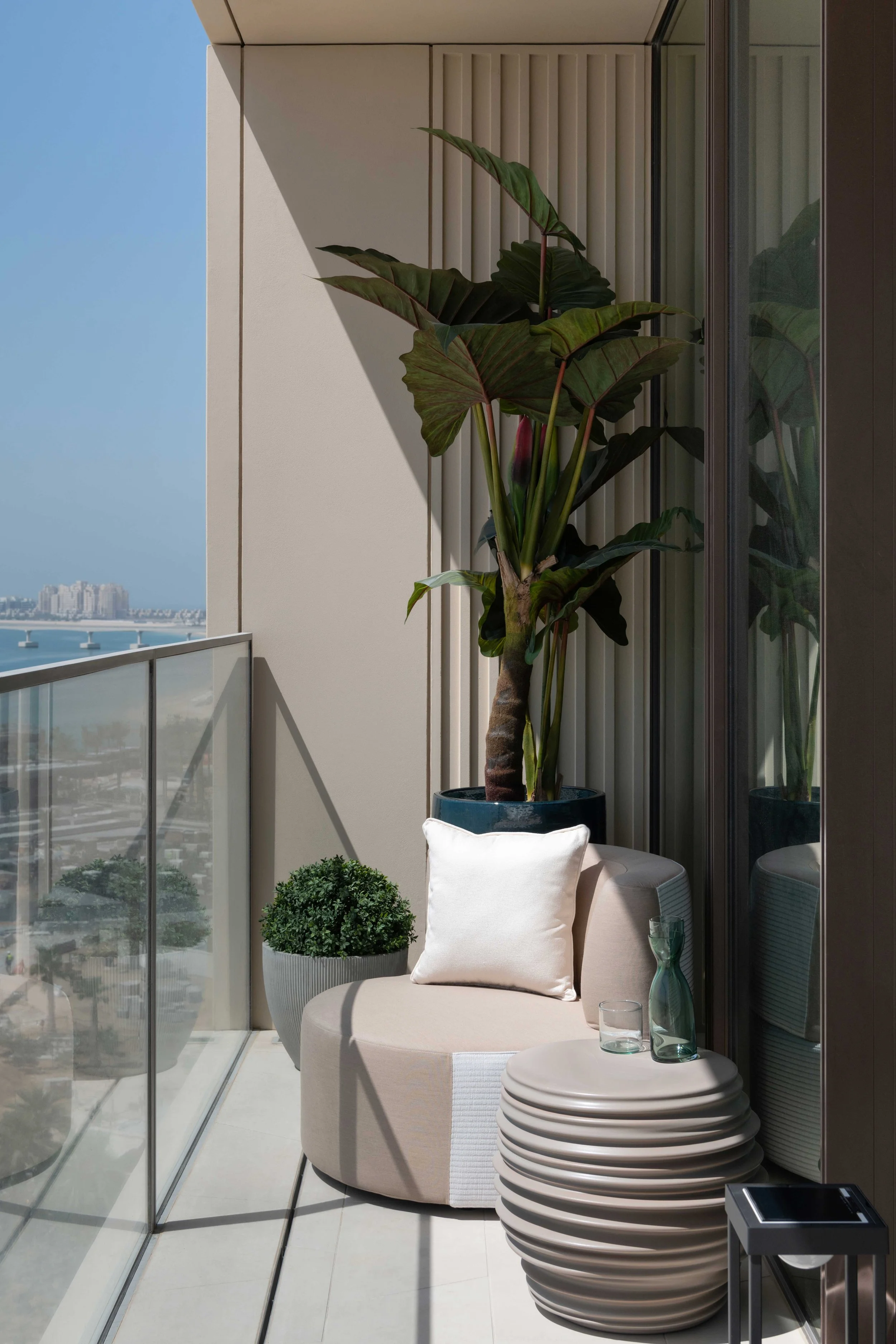
With abundant sunshine, outdoor spaces are an invaluable asset in Dubai. Many Dubai homeowners love to blur the boundaries between indoors and outdoors, with terraces, balconies, pools and gardens serving as extensions
of indoor spaces.
A good designer will create visual continuity between the two areas, carrying colours, textures and scale cohesively throughout the property. This doesn’t mean we can use the same materials: items in direct sunlight must
be UV-resistant, materials near pools need to meet relevant safety requirements, and materials such as solid wood need to be selected and finished appropriately to minimise warping and movement.
CONSIDERED DESIGN FOR WARMER CLIMATES
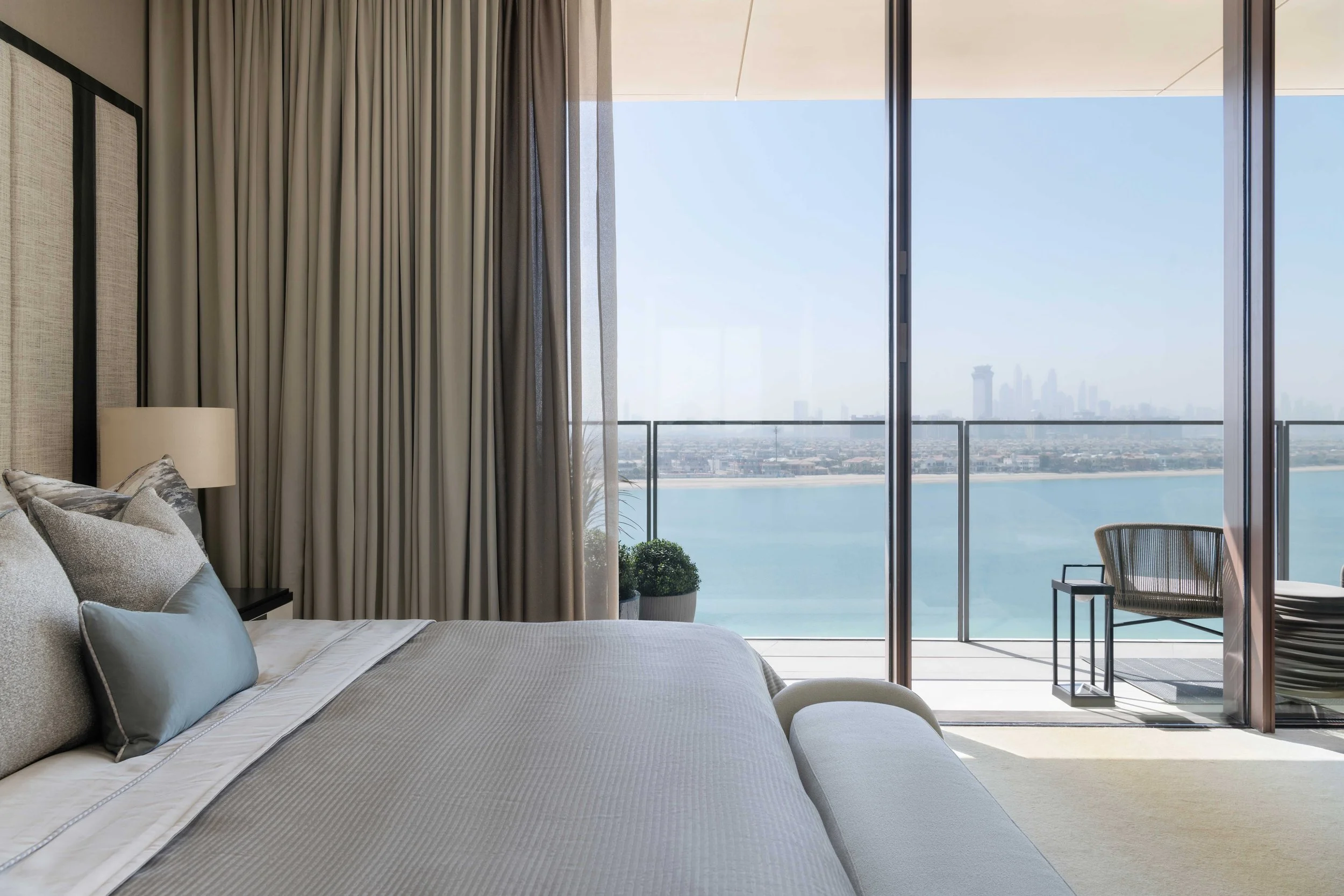
Comfort is paramount in a home, and living in a hot climate brings
a distinct set of design considerations. Whereas in some climates insulation and ‘cosiness’ might be a priority, in Dubai, light and airy interiors feel far more appropriate. Fabrics such as linen and cotton blends can feel cool and comfortable, while lighter colours can help create a sense of brightness.
Traditional homes in the region have long prioritised airflow,
so a minimalist aesthetic that maximises space around pieces,
along with raised furniture that allows air to pass beneath,
can work particularly well in Dubai interiors. Designers will also consider a property’s size and scale: air circulation and cooling requirements mean that furnishings in an apartment may differ
from those in a large villa, ensuring that spaces remain comfortable
and easy to use.
At Accouter, we understand how to create bespoke pieces that respond to the demands of the local climate, working closely with trusted manufacturers to adapt materials, finishes and designs where required, without compromising the integrity of the overall scheme.
DESIGNED WITH LONGEVITY IN MIND
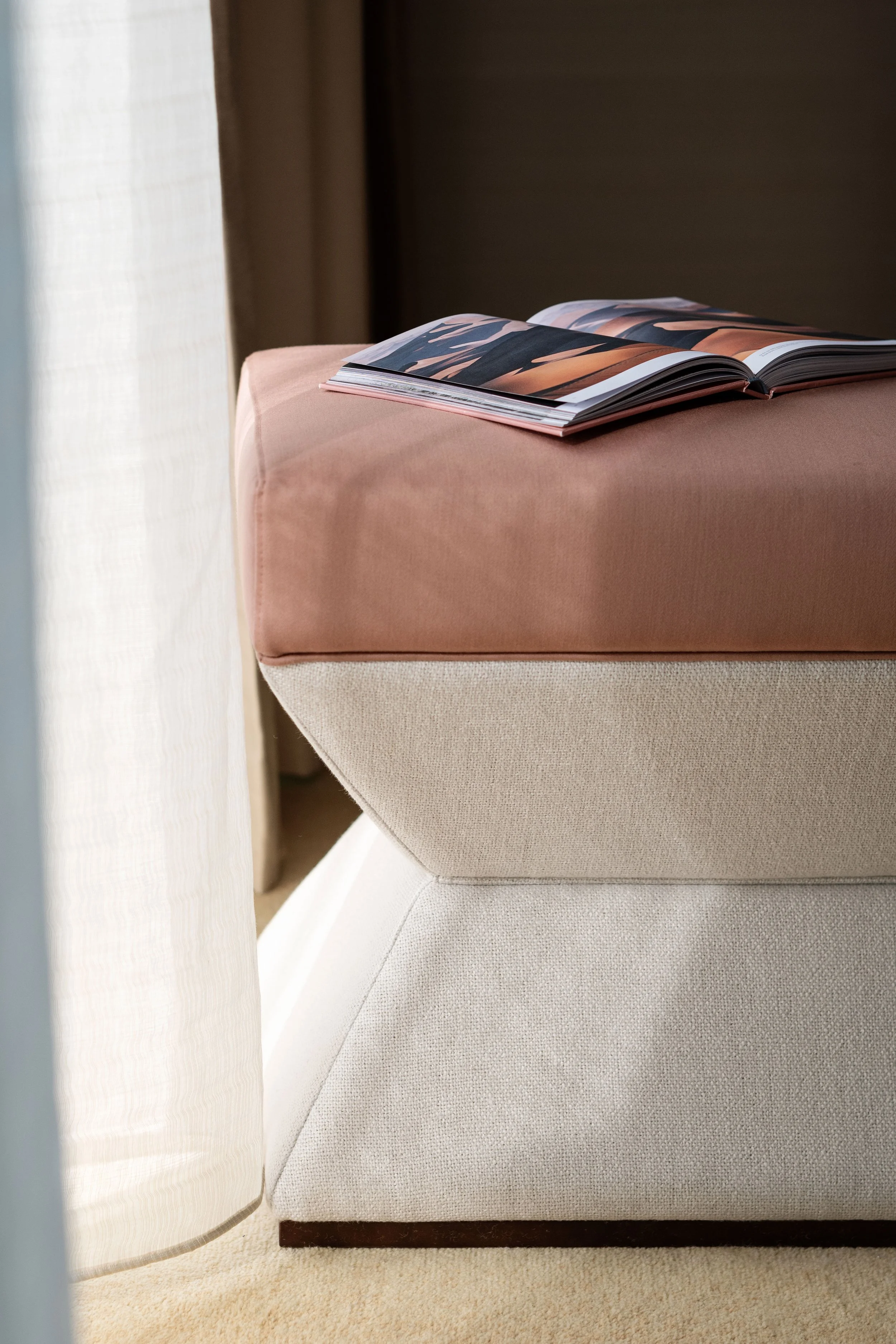
Fabrics are an invaluable design tool for creating atmosphere and comfort,
but they are also prone to fading in sunny climates. Placement plays a part: valuable rugs and textiles can be positioned out of direct sunlight. Where
light levels cannot be controlled, modern performance fabrics can provide protection against UV exposure, staining and wear.
Pale colour schemes look beautiful and are more forgiving when it comes
to noticeable fading. A designer will carefully balance practicality and durability with comfort and visual opulence: it’s an effortless aesthetic
that feels very Dubai.
Maintenance matters too. Over time, changes in temperature and
humidity, together with the transition between Dubai’s outdoor climate
and air-conditioned interiors, can place stress on natural materials.
Accouter can advise on the best furniture for heat and humidity,
and recommend an ongoing maintenance schedule to protect timbers, leathers and textiles. This ensures that household teams and maintenance staff can keep your home looking as beautiful as the day it was completed.
INTELLIGENT SPATIAL PLANNING
Regarding furniture for hot climates, placement is also key. 3D modelling of the sun-path helps us understand where the sun will be throughout the day. With this projection, a designer can plan for solar comfort, whether by considering the placement of materials such as glass and metal or by providing window coverings. Even exterior planting and indoor houseplants can provide valuable shade.
Furniture can be placed to suit the sun and shadows: a table for breakfast is best positioned to make the most of the morning light, while
a terrace with a view of the sunset can be furnished to enjoy the moment to the fullest. Accurate spatial planning at the design stage
can maximise the performance of every element in your home.
FURNISHING FOR A RETURN ON INVESTMENT
Experienced designers with local knowledge know where to spend and where to be cautious. This is particularly important for landlords and short-term rental hosts.
Materials that require intensive maintenance or are prone to fading, cracking, or warping may need replacing within a few years. Investing in pieces suitable for Dubai’s climate can reduce replacement and maintenance costs while ensuring the property remains desirable for many years to come.
For property investors, furnishing is not simply about how a home looks on completion. The right choices
can protect the property's value over time, ensuring that the design continues to perform as well as it did
on the day it was handed over.
GLOBAL EXPERTISE, LOCAL UNDERSTANDING
At Accouter, we combine our knowledge of international design standards with an understanding of Dubai’s climate and lifestyle.
Whether you are furnishing a private residence or an investment property, talk to Accouter about creating
an interior perfectly suited to Dubai.